Give every student a Future they can build
We bring trained instructors, robotics kits and a full 3-year curriculum directly to your school — so students build real robots, learn AI and develop games starting from Week 1.
What our students learn
About our program
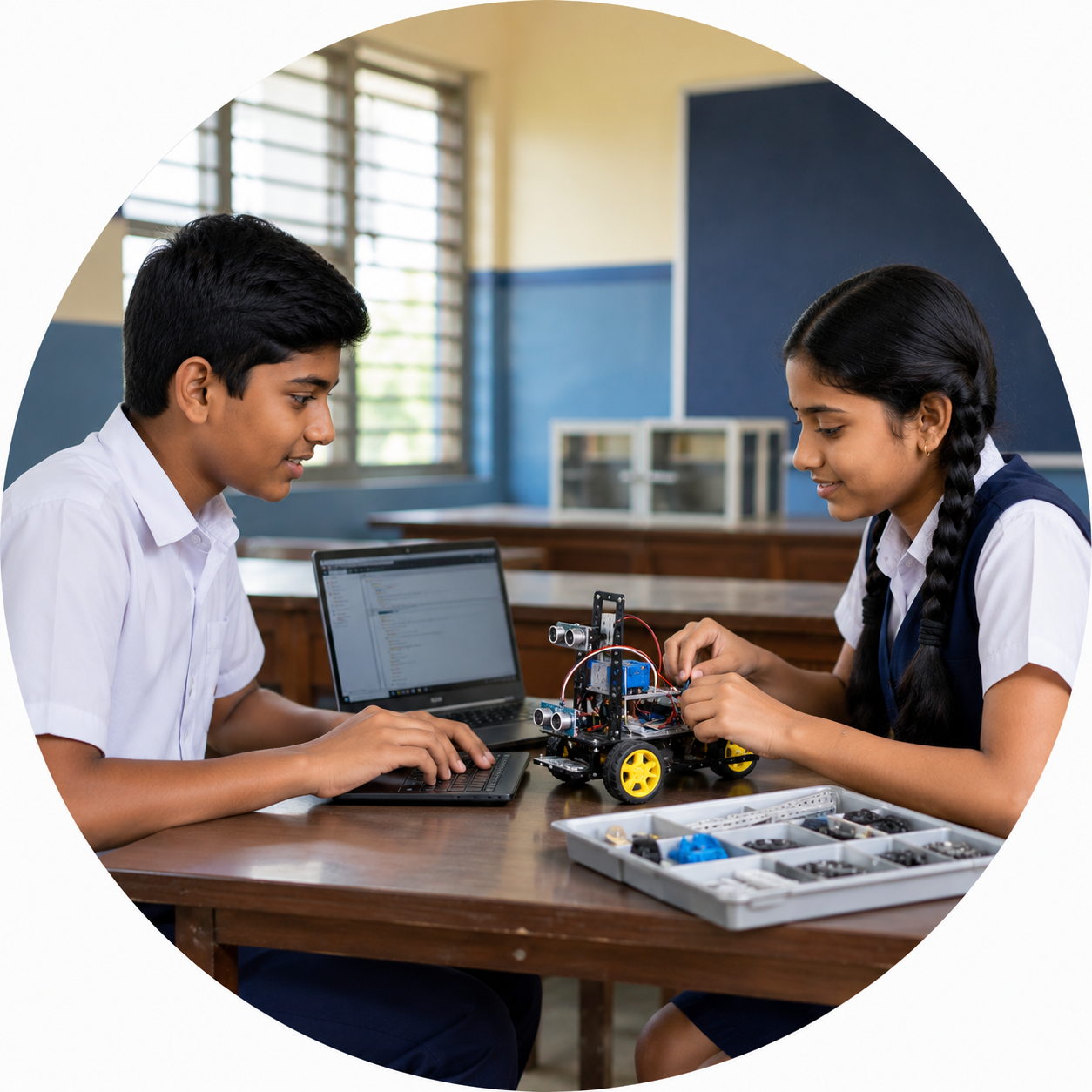
Most schools want to teach Robotics, AI and Coding — but the setup stops them. Who sources the kits? Who trains the teachers? Who builds the curriculum? We handle every bit of it.
Krishnabhirama Tech Academy is a school-based STEM — Science, Technology, Engineering & Mathematics — program that runs entirely inside your school. Our trained instructor arrives every week, brings all the hardware, delivers structured lessons, and leaves with everything packed away. Your school gets the results without the overhead.
Every class ends with a working project. Every term builds on the last. And every year closes with an Annual Exhibition where students present their robots and AI projects to parents and guests. We are proudly aligned with NEP 2020.
How it works
From your first enquiry to the day your students build their first robot — every step, made simple.
We visit your school, understand your grade structure and timetable, then formalise everything through a transparent 3-year MOU — agreed before anything begins. No surprises, no commitments until you're ready.
Your school opens the door — our instructor arrives with everything else. Robotics kits, curriculum, workbooks and assessments, every single week. Zero procurement, zero setup burden on your staff.
Every class ends with a working result — not theory, a real project. Every term builds on the last. Every year closes with an Annual Exhibition where students present their robots and AI projects to parents and guests.
Target group & program modules
Grade 1–10 · 3-Year Progressive Curriculum · Summer Camp
What we bring to your school
Your school opens the door — we bring everything else
All hardware provided and managed by us. 1 kit per 4–5 students, stored at your school. Your school purchases nothing.
Our instructor attends your school on the agreed schedule — consistent, accountable, and student-focused.
Lesson plans, student workbooks and assessments — structured across Foundation, Exploration and Innovation years.
Regular assignments and written term-end reports so teachers and parents can see each student's growth.
Year-end showcase where students present to parents and guests. Top students prepped for regional and national STEM competitions.
Every student who completes the program receives an official certificate from Krishnabhirama Tech Academy — a recognised credential that documents their STEM learning journey.
Is your school ready?
Just 5 things we need to kick off the program
- Classroom Space Lab with projector or Smart TV
- Computers 10+ desktops · Windows 10
- Power Supply Reliable electricity for all equipment
- Seating Chairs & tables for 30–40 students
- Storage Secure storage for robotics kits
What students actually gain
Not abstract "skills" — real, observable outcomes from Day 1
By Week 3, Grade 1 students have assembled a working robot. Not a model — a machine that moves, responds to sensors and can be programmed.
Students who struggle with textbook science discover they're great at applied engineering. Hands-on work removes the intimidation from math, physics and logic.
When a robot doesn't work, students diagnose why. This structured problem-solving mindset carries across every subject — and every future challenge.
By Year 3, students write Python, train basic Machine Learning models and build autonomous robots — skills most adults haven't touched.
Top students represent their school at regional and national STEM competitions, building a portfolio of real projects well before Class 10.
Every project is a team effort — planning, dividing tasks, testing together. These collaboration habits form naturally in every hands-on session.
Our students in action
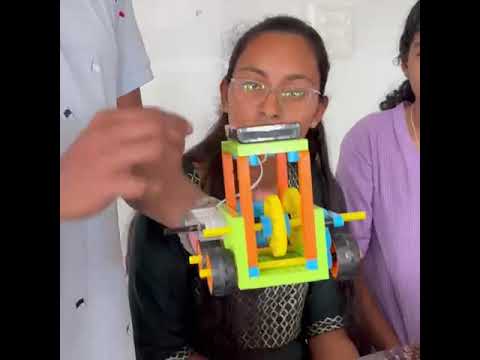
Real projects, real robots, real learning — every single week
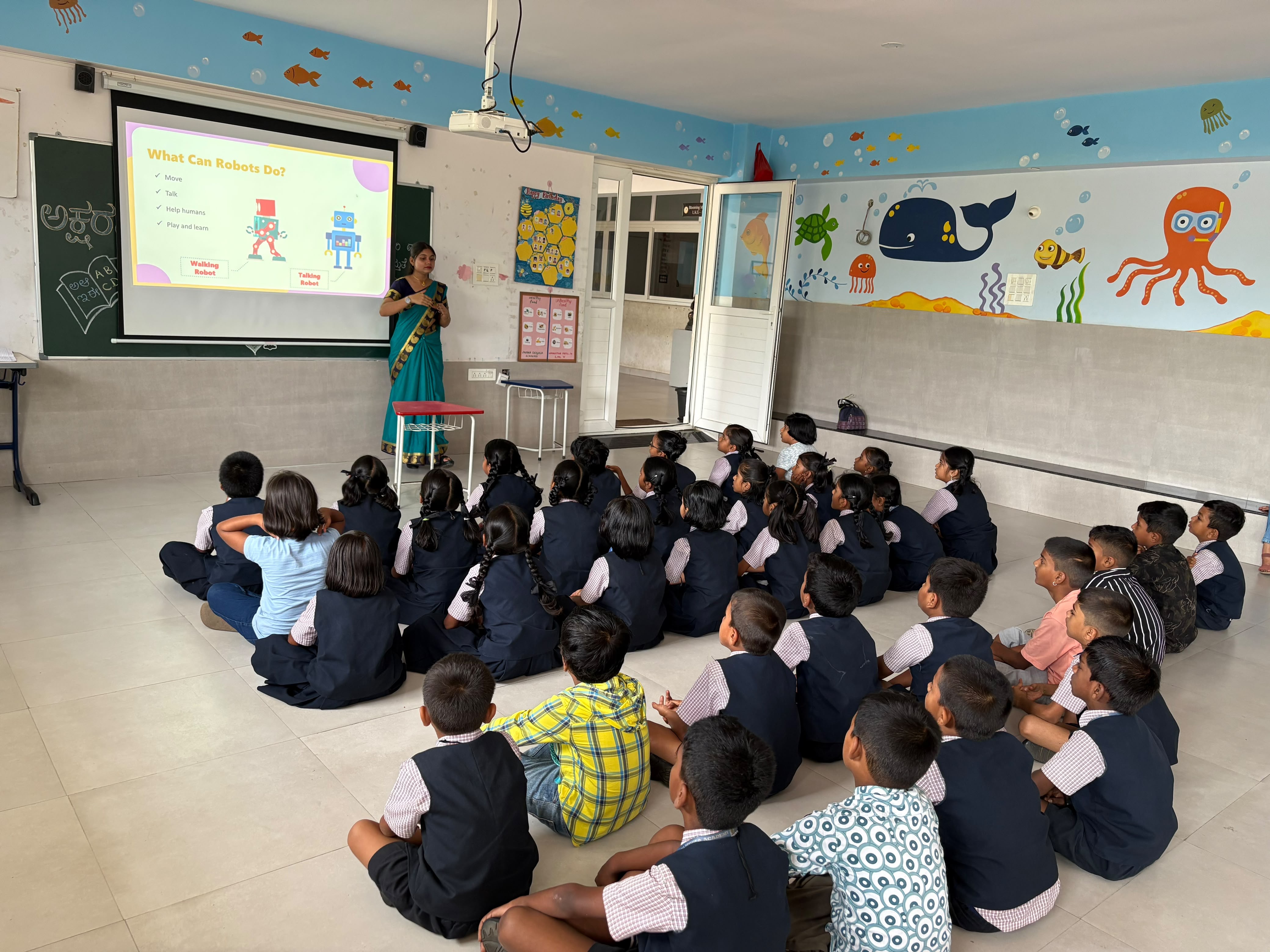
Annual exhibition & competition
Every year, students present their completed robots and AI projects to parents, teachers and invited guests. Top performers go on to regional and national STEM competitions.
We're building our founding cohort of partner schools. Photos from our first robotics classes and student exhibitions will appear here as programs launch.
Annual school package
A complete, year-round STEM program designed around your academic calendar and student count
Every school is different — so every package we design is too. We work directly with school management to agree on session frequency, grade coverage and kit allocation before the program begins. All pricing is per-student and discussed transparently as part of a formal MOU.
Designed for full-school deployment — all eligible grades covered simultaneously under a single agreement.
10-month structured program that runs alongside the school calendar with progressive monthly lessons.
All hardware fully supplied — 1 kit per 4–5 students, stored and managed on school premises.
Session frequency is agreed with the school before the MOU — designed to fit your existing timetable naturally.
End-of-year showcase and competition where students present their projects to parents, teachers and guests.
Structured content, student workbooks and assessments — fully aligned with NEP 2020 guidelines.
Schools We're Proud to Serve
Every great innovator starts somewhere — it starts here, in your school
Jnana Degula Academy
📍 Near Banashankari Temple, Galihalli Cross, Tarikere, Karnataka, India — 577228
More schools joining soon
We're growing — new partnerships on the way across Karnataka
Frequently asked questions
Answers for students, parents and schools
What grades can participate in the program?
Our program covers Grade 1 through Grade 10, delivered through a 3-year progressive curriculum. Grade 1–3 (Year 1 — Foundation) covers introductory Robotics and Scratch Coding. Grade 4–6 (Year 2 — Exploration) moves into electronics and autonomous robots. Grade 7–10 (Year 3 — Innovation) covers Arduino, Python, AI and advanced Robotics.
Does my child need any prior experience in Coding or Robotics?
No prior experience is needed — none at all. The program is designed to start from zero. A Grade 1 student with no technology background will be building a working robot within the first few sessions. Everything is taught step by step, at the right pace for each grade group.
What will my child actually build during the program?
Younger students (Grade 1–3) build basic robots, learn block-based Scratch coding and create simple games. Middle grades (4–6) move into electronics, autonomous robots and sensor-based projects. Senior students (7–10) program Arduino microcontrollers, build wireless robots and work on AI and Python projects. Every class ends with a working result your child brings home or demonstrates.
How will I know my child is making progress?
Progress is visible — your child will come home with completed projects and talk about what they built that day. We also provide term-end progress reports through the school. At the end of every academic year, students present their projects at an Annual Exhibition, which parents are invited to attend.
Is the program safe for young children?
Yes. All robotics kits used for younger grades are designed for children and contain no sharp components or dangerous voltages. Our instructor supervises all hands-on work. Sessions are structured to be safe, engaging and age-appropriate for every grade group from Grade 1 upwards.
Does our school need to buy any robotics kits or equipment?
No. All robotics kits are fully provided and owned by us. We bring them to your school every session and store them securely in your lab at the end of each class. Your school purchases no hardware whatsoever — the entire program runs on what we supply.
How many sessions per week and how long is each session?
Session frequency is agreed with school management before the MOU is signed — typically 2 or 3 sessions per week per batch. Each session is 45–60 minutes, fitting naturally into a standard school period. The schedule is designed around your existing timetable so it never disrupts core academic classes.
What does a typical class actually look like?
A typical session begins with a 10-minute concept introduction, followed by 30–35 minutes of hands-on building or Coding, and closes with a 5-minute group review. Students always leave with a working result — there are no theory-only classes. Every session is a project.
How long is the full program?
The school program runs for the full 10-month academic year and is structured as a 3-year progressive curriculum — meaning a student who joins in Grade 1 progresses through Years 1, 2 and 3 as they move up grades. Schools sign a 3-year MOU to begin. There is also an independent Summer Camp (Ages 6–14) that runs separately from the year-round school program.
What does our school need to provide?
Your school needs: a computer lab with 10+ Windows 10 desktops, a projector or Smart TV, reliable electricity for all equipment, seating for 30–40 students, and a secure storage wardrobe for our robotics kits. We handle all curriculum, hardware, instruction and support — your school just opens the door.
How is the program priced?
Pricing is per student per month and is discussed transparently with school management before any agreement is signed. The rate depends on session frequency, grade coverage and student strength. Payment is typically 50% upfront with the balance spread over 5 months. A 10% annual increment applies from Year 2. Contact us for a formal proposal specific to your school.
Can we see a demo class before committing?
Yes — absolutely. We offer a no-obligation demo session at your school. Your students experience a real class, your teachers see the curriculum in action, and you can ask every question before signing anything. Get in touch via the contact page or call us directly to arrange a date.
Is this program aligned with NEP 2020?
Yes. Our entire curriculum is designed to complement India's National Education Policy 2020, which emphasises experiential learning, critical thinking and 21st-century skill development. Our program directly supports NEP 2020's mandate to integrate STEM, Coding and applied problem-solving at the school level across all grade groups.
What happens at the end of the academic year?
Every year closes with an Annual Exhibition — a formal event where students demonstrate their completed robots and AI projects to parents, teachers and invited guests. This gives students real public presentation experience. Outstanding students are also identified and prepared for regional and national STEM and Robotics competitions.
Do students receive a certificate after completing the program?
Yes. Every student who successfully completes the program receives an official certificate from Krishnabhirama Tech Academy. The certificate recognises their achievement in STEM, Robotics and AI learning and serves as a valued credential alongside their school record.
Ready to bring Robotics & AI to your school?
Have questions, or ready to get started — we're here either way. Send us a message and we'll take care of everything from there.
- Free demo class at your school
- Every question answered
- NEP 2020 aligned curriculum